
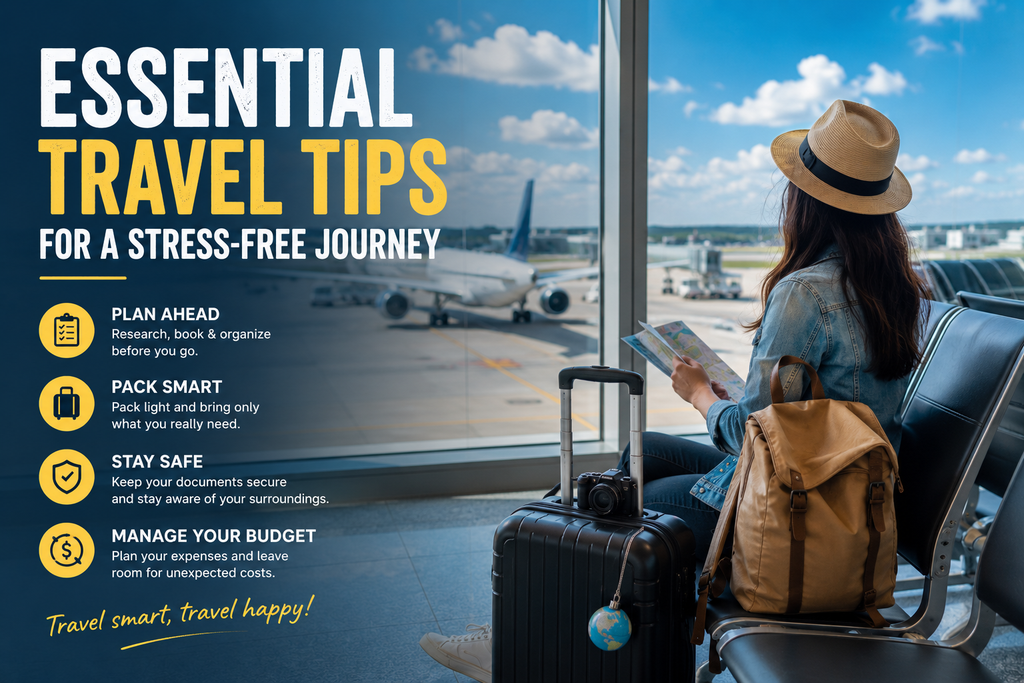
Traveling should be exciting, not stressful. But without proper planning, even a dream vacation can become difficult. From packing your bags to navigating airports and managing your budget, a little preparation can make your entire journey smoother and more enjoyable.
Whether you’re planning a weekend getaway or a long international adventure, these simple travel tips will help you stay organized, save time, and enjoy every moment of your trip.
1. Plan Your Trip Before You Leave
A good trip starts with good planning. Before you travel, research your destination and create a simple itinerary.
Check the places you want to visit, transportation options, opening hours, local customs, and weather conditions. You don’t need to plan every minute of your trip, but having a basic plan will help you avoid unnecessary stress.
Quick tip: Keep your important reservations and travel information in one place so you can access them easily.
2. Pack Smart, Not Heavy
One of the biggest travel mistakes is packing too much.
Choose versatile clothes that can be combined in different ways and pack only what you are likely to use. If you’re traveling by air, check your airline’s baggage allowance before leaving home.
Don’t forget essentials such as:
- Passport and travel documents
- Phone and charger
- Basic toiletries
- Necessary medication
- Comfortable shoes
- Travel adapters
- A small first-aid kit
Remember: You can usually buy everyday items at your destination if you forget something.
3. Keep Your Important Documents Safe
Your passport, tickets, accommodation details, travel insurance, and other important documents should always be easy to access.
Keep digital copies of important documents on your phone or in secure cloud storage. It’s also a good idea to have an offline copy in case you don’t have internet access.
Never keep all your important documents and money in the same place.
4. Arrive Early at the Airport
Rushing through an airport can turn the beginning of your holiday into a stressful experience.
For international flights, give yourself plenty of time for check-in, security, immigration, and finding your gate. Check your airline’s recommended arrival time and allow extra time during busy travel periods.
Arriving early gives you time to relax, grab something to eat, and deal with unexpected delays.
5. Make a Realistic Budget
Creating a travel budget before your trip can help you enjoy your vacation without constantly worrying about money.
Consider expenses such as:
Accommodation + Transportation + Food + Activities + Shopping + Emergency expenses
Leave some extra money available for unexpected situations. It’s better to have a little more than you need than to run out of money halfway through your trip.
6. Don’t Try to See Everything
It’s tempting to visit as many attractions as possible, especially when you’re traveling somewhere for the first time.
But trying to see everything can leave you exhausted.
Instead, choose a few important places and give yourself enough time to enjoy them. Leave some free time in your schedule for relaxing, exploring local neighborhoods, or discovering something you didn’t plan for.
Sometimes the best travel memories happen when you have nowhere to be.
7. Learn a Few Local Phrases
You don’t need to become fluent in the local language before your trip.
Learning simple phrases such as:
- Hello
- Thank you
- Please
- Excuse me
- How much?
- Where is…?
can make everyday interactions easier and more enjoyable.
Locals often appreciate travelers who make an effort to communicate in their language.
8. Stay Connected
Before leaving, check how you’ll access mobile data at your destination.
Depending on the country, you may choose between international roaming, a local SIM card, or an eSIM.
Download important maps and travel information before leaving your accommodation so you can still access them when you don’t have an internet connection.
9. Take Care of Your Belongings
Keep an eye on your belongings, particularly in crowded tourist areas, public transportation, airports, and busy markets.
Use a secure day bag and avoid carrying unnecessary valuables. When possible, keep important documents and extra money somewhere secure rather than carrying everything with you.
Being cautious doesn’t mean being paranoid—it simply means being prepared.
10. Leave Room for the Unexpected
Even the best-planned trip can have unexpected moments.
Flights may be delayed, weather can change, restaurants may be closed, or your plans may simply not work out.
Instead of letting these situations ruin your trip, try to stay flexible.
Sometimes an unexpected change can lead to one of the most memorable experiences of your journey.
✈️ Your Stress-Free Travel Checklist
Before you leave, make sure you have:
☑ Passport and required travel documents
☑ Flight and accommodation details
☑ Travel insurance
☑ Phone, charger, and adapter
☑ Enough money and a backup payment method
☑ Essential medicines and toiletries
☑ Offline maps and important information
☑ A basic itinerary
☑ Emergency contact information
🌍 Travel More, Stress Less
The goal of traveling isn’t to create the perfect itinerary. It’s to experience new places, meet new people, discover different cultures, and create memories you’ll remember for years.
With a little preparation and a flexible mindset, you can avoid many common travel problems and focus on what really matters—enjoying the journey.
So pack your bags, check your passport, and get ready for your next adventure. The world is waiting. 🌎✈️